
Gravity and Gear: A Newcomer’s Guide to Rappelling
Take the Leap and Discover Adventure from a New Perspective
"Life begins at the edge of your comfort zone—and about fifty feet above the ground." - Unknown
When you’re trying something new, having the right gear can drive you away or make the experience So Much Better! Rappelling is no different. If you don’t have the proper rappelling equipment, it’s tough to get very far. It might seem intimidating at first, but all you truly need to get started is a harness, helmet, rappel device, and a rope.
Here we highlight the basic rappelling gear you’ll need to begin your adventure, so you can feel comfortable and ready. Stepping off that edge for the first time can be scary…. and thrilling!
What is Rappelling?
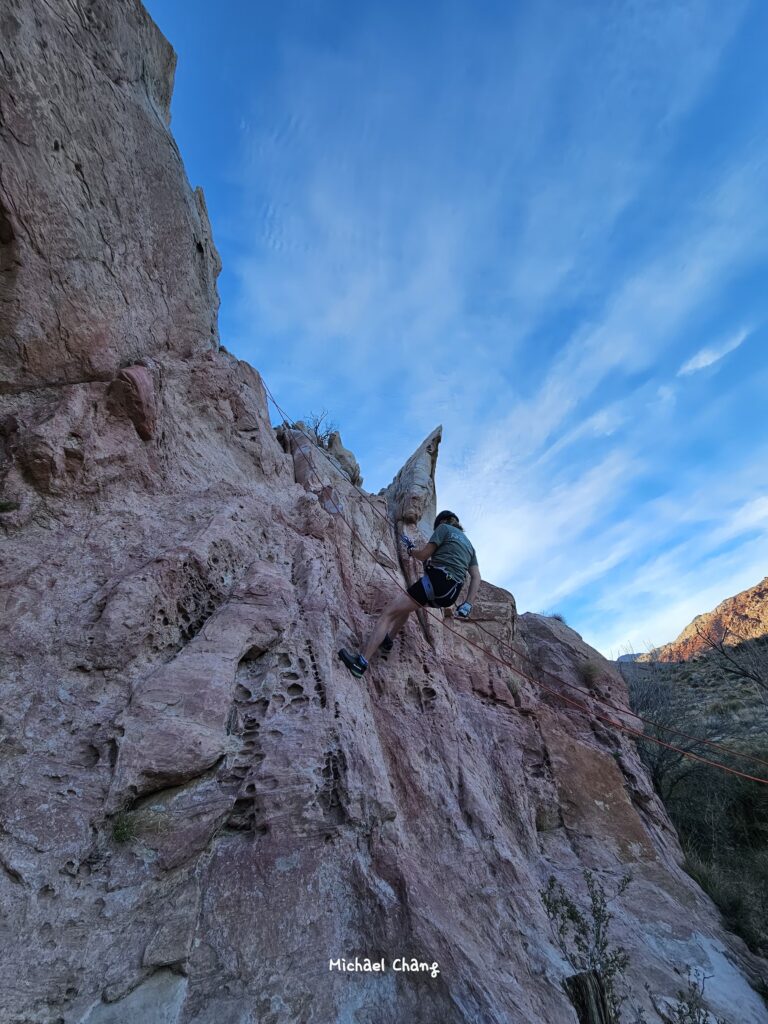
Rappelling is the practice of using ropes, a harness, belay device and other equipment to descend steep terrain. It’s an important part of climbing, caving and canyoneering–the exploration of canyons, but rappelling is its own sport as well.
During a standard rappel, a person often lowers themself down vertical terrain with their back toward the ground and feet in contact with the rock. The rappeler typically walks down while letting the rope slide through the device.
If you’re looking to level up and get your adrenaline fix, this is a great way to explore the outdoors, and you don’t have to be an expert to start. With the right gear and a little practice, anyone can revel in the thrill of plunging down a cliff or canyon walls. All you need is a positive attitude and the basic equipment to stay safe and have a great time.
Rappelling Gear
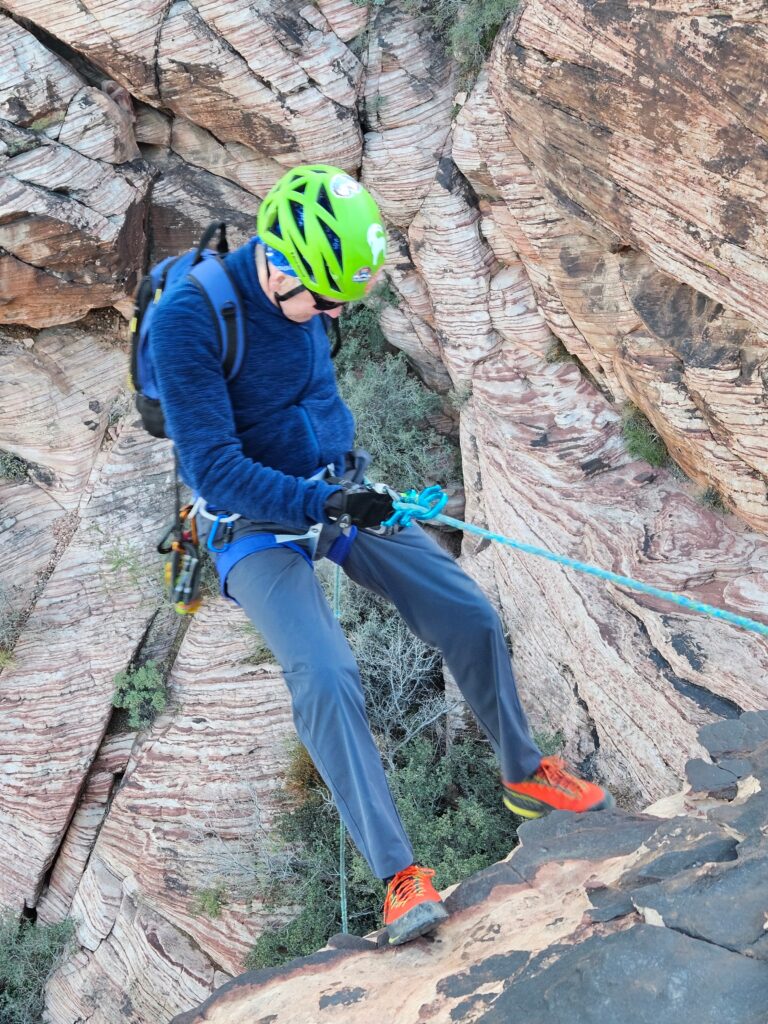
Rappelling uses much of the same gear as climbing, but there are a few important differences to know about. The bare minimum gear you need to get started:
- Helmet – Get a certified helmet that meets UIAA 106 or CE EN 12492 standards. A secure, adjustable chin strap is crucial. It doesn’t need to be expensive to be good!
- Harness – A Sit harness (Type C) fits snugly around your waist and upper thighs, forming a comfortable seat.
- Rope – A static or low-stretch kernmantle rope (9mm–11mm diameter) is preferred for rappelling because it doesn’t stretch. This allows for a smoother, easier-to-manage descent.
Speaking of your descent, you’ll use specialized rappelling equipment. These are the most common type of devices:
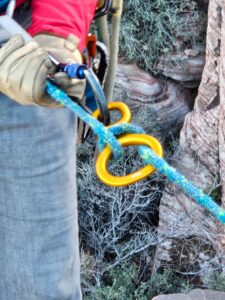
Figure Eight – This descender is a friction-based rappelling device (shaped like the number “8”). Used for controlled descent in climbing, caving, canyoneering, and rescue work, it operates by threading a loop of rope through the large hole and around the neck, creating friction. The benefits are its simplicity, heat dissipation, and ability to handle thick or icy ropes.
ATC – (aka – Air Traffic Controller) – Primarily used for belaying (securing) a climber and for rappelling (descending) down a rope. This aluminum tube-style device creates high friction by forcing the rope into a “double bend” when it passes around a locking carabiner hooked to a harness.
Once you get a bit more comfortable and start rappelling faster, wearing gloves can help protect your hands from rope burn. Even if you’re taking it slow, it’s recommended to use gloves. It’s a smart move, and you can learn how to handle the rope with ease.
The Buddy System – Your Belayer
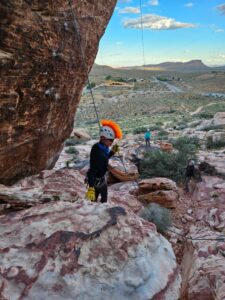
When you’re rappelling, it’s smart to have a belayer with you. This is someone who handles a safety rope and keeps an eye out for you as you climb or descend. They use special techniques and devices to control the rope, making sure you don’t go too fast, and can catch or lower you safely if you slip. Belayers are crucial for safety in climbing and mountaineering.
When positioned at the base of a route, key responsibilities include:
- Managing Slack: Taking in excess rope as a climber moves up to ensure a tight line.
- Catching a Fall: Using a belay device to lock the rope and instantly hold the climber’s weight.
- Lowering: Safely and slowly descending a climber to the ground after completing a route.
- Nautical Securing: In a traditional context, a person securing a rope around a cleat or pin
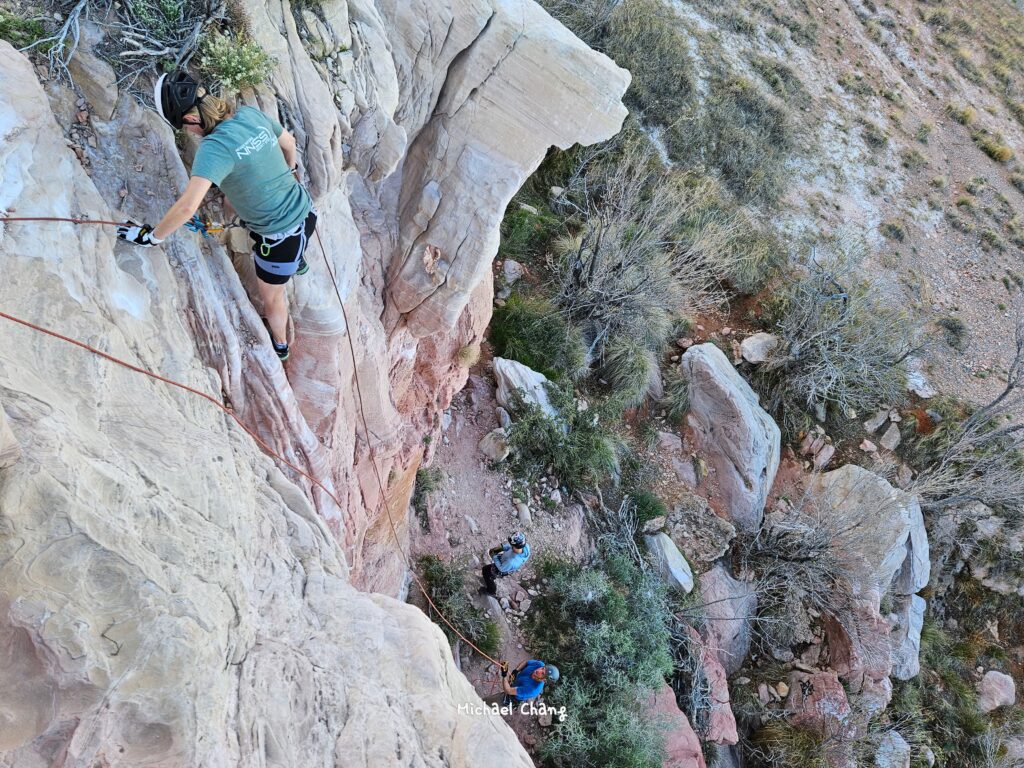
If you’re new to rappelling, it’s helpful to have friend at the top, especially someone with experience. Sometimes, they’ll use a second rope to give you a top-belay, which means they can control your speed as you go down. If you’re feeling a little anxious, having someone in charge can make things much less scary.
Whether you have a top or bottom belayer, if you lose your grip or feel unsure, they can simply pull down on the rope. This creates friction and slows you down, keeping you safe. Make sure you practice with someone experienced until you’re comfortable setting up anchors and descending cliffs by yourself.
Where Can I Go Rappelling Near Me?
Las Vegas offers premier, accessible sport rappelling in limestone and sandstone slot canyons. Bolted anchors are primarily near Red Rock National Conservation Area (RRNCA) and Lake Mead. Key spots include the beginner-friendly Hidden Canyon, routes like Boy Scout Canyon, offer quick access to exciting, multi-rappelling adventures. Popular technical routes are in Hidden Falls.
There are several organizations and businesses that offer courses in rappelling. However, as a member of VegasHikers, you have access to experienced sport rappellers who can show you the ropes and help you decide if you want to take the plunge (see what I did there?) During the cooler months for beginners there’s Rappelling Practice – Skills & Drills (Beginner Friendly) with Zach C. Once you have more experience, there are several other organizers that can get you that rush when you lean back over the precipice.
If you’re looking for a dose of empowerment with your adrenaline, check out rappelling near me in Calico Basin and the Red Rock National Conservation area.
So, use your head, be safe and remember – That first step is a doozy – And the beginning of your next great adventure!
The VegasHikers Community
VegasHikers is a community of enthusiasts that supports members in a broad range of outdoor sports and events:
Hiking • Rock scrambling • Rappelling • Climbing • Camping • Backpacking • Kayaking • Canyoneering • Fitness • Environmental Stewardship • Volunteerism • Friendship • Inclusivity • Leadership
Join us on Meetup.com/VegasHikers and check out our Facebook page for more information and clips of us in action!
There’s at least one event a day on our calendar, 365 days a year. Take a look at the our schedule, read the descriptions and requirements for an activity and sign up for an event that tickles your fancy.
